Twelve months following Bashar al-Assad’s collapse, Israeli forces conduct systematic military operations across Syria—more than 600 attacks averaging nearly two daily according to Armed Conflict Location and Event Data tracking. Yet this campaign, combined with permanent occupation of territory beyond 1974 disengagement lines, demonstrates classic overreach pattern: tactical dominance generating strategic vulnerability through simultaneous commitment across multiple fronts without achievable endstates.
Assad’s Fall Created Window Netanyahu Failed Exploiting Politically
Ahmed al-Sharaa’s initial statements signaled accommodation possibilities. Damascus Governor Maher Marwan told NPR: “We have no fear towards Israel, and our problem is not with Israel…we want peace, and we cannot be an opponent to Israel.” These declarations—made amid Gaza operations—reflected genuine Syrian exhaustion following fourteen-year civil war rather than strategic calculation.
Netanyahu possessed precedent for transforming nascent leaderships into alignments. Previously easing Mohammed bin Salman’s Washington path enabled consolidating crown prince position. Similar approach toward Sharaa could have secured Syrian neutralization through diplomatic engagement rather than military domination—particularly given Sharaa’s dependence on American sanctions relief and reconstruction assistance.
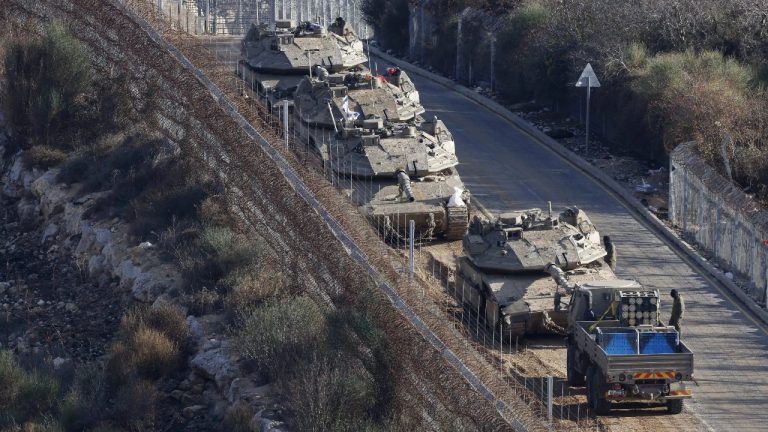
Instead, Israel launched massive bombardment immediately following regime change, decimating air force, sinking fleet, leveling air-defense infrastructure within days. Initial 480 strikes within 48 hours destroyed 70-80% strategic weapons alongside fifteen naval vessels. Ground incursion followed—first seizing Mount Hermon, subsequently expanding control over approximately 420 square kilometers beyond UN buffer zone, exceeding Gaza’s entire territory.
This destruction preceded any threatening Syrian actions toward Israel—representing preventative degradation based on hypothetical future scenarios rather than immediate security requirements. Defense Minister Israel Katz defended invasion as “necessary to protect Golan and Galilee communities,” citing October 7 precedents, yet Syrian forces posed no comparable capability or intent.
Beit Jinn Incident Exposes Operational Limitations
November 28 pre-dawn raid on Beit Jinn—50 kilometers southwest of Damascus—nearly became military disaster. Israeli helicopters and artillery struck as soldiers stormed homes seizing three villagers. Fierce firefight developed as entire village joined repelling invaders, requiring fighter jet deployment after forces became surrounded. Final toll: 13 Syrians including two children killed, 25 injured, while six Israeli soldiers wounded including three seriously.
Israel claimed targeting Jamaa Islamiya members planning attacks, yet the group—Lebanese Muslim Brotherhood branch—stated it conducts “no activities outside Lebanon” and had abided by November 2024 ceasefire. Local official Walid Okasha confirmed casualties were civilians, including family of five and man married previous day. Resident Firas Daher described troops encountering “slight resistance with light weapons” prompting disproportionate aerial response.
The operation revealed vulnerabilities: inadequate intelligence distinguishing militants from civilians, insufficient ground force capability requiring immediate air support escalation, and Syrian population willingness resisting despite overwhelming firepower disparity. Damascus condemned “horrific massacre” constituting “full-fledged war crime.” Significantly, Israel destroyed its own disabled Humvee through airstrikes—tactical detail suggesting extraction difficulties.
Beit Jinn previously targeted in June with similar justifications, seizing alleged Hamas members and killing man with schizophrenia history. Repeated operations same village demonstrates either persistent militant presence despite Israeli actions or flawed targeting undermining legitimacy claims.
Military Parade Rhetoric Signals Evolving Syrian Posture
Recent military parade witnessed troops chanting: “Gaza, Gaza, Gaza…we are coming for you, our enemy, coming, coming for you, even if you were a mountain of fire, I will make from my blood ammunition.” This represents dramatic shift from Sharaa’s initial peace rhetoric—transformation driven by sustained Israeli military operations rather than Syrian policy changes.
Israeli government minister subsequently hinted at potential Syria war, demonstrating how military dominance creates escalatory dynamics. One year ago, Syrian administration explicitly sought avoiding Israel confrontation. Current environment—shaped by hundreds of strikes targeting Damascus presidential vicinity and Defense Ministry headquarters, permanent territorial occupation, and civilian casualties from village raids—generates popular pressure for resistance regardless of leadership preferences.
Trump maintains support for Sharaa despite recent Islamic State attack killing two U.S. soldiers, acknowledging Damascus lacks control over attack location. This restraint contrasts sharply with Israeli approach—Trump seeks stability through Syrian government strengthening while Netanyahu pursues permanent weakening through canton-style fragmentation.
Simultaneous Commitments Create Strategic Vulnerability
Netanyahu characterized conflicts as “never-ending” using cancer metaphor: “if you have cancer and you take it out, it can still come back…if you don’t take it out, you die.” This analogy inadvertently exposes strategic failure—cancer recurs when treatment weakens patient while cells grow more resilient. Permanent war footing across multiple fronts generates exactly this dynamic: Israeli forces spread increasingly thin while adversaries adapt and strengthen.
Distribution of 600+ attacks demonstrates resource commitment scale: Quneitra 232 strikes, Daraa 167, Damascus area 77, capital city 20. These operations occur alongside Gaza commitments, Lebanon ceasefire monitoring requiring periodic violations enforcement, West Bank escalations, and potential Iranian contingencies. Force structure designed for territorial defense increasingly functions as imperial policing across fragmented territories.
Israel seized estimated 420 square kilometers beyond buffer zone—territory comparable to Denver’s size—requiring permanent garrison presence. Maintaining Mount Hermon positions, conducting village raids, protecting expanding settlement activities, and enforcing demilitarization demands all require sustained manpower commitments without clear exit criteria.
The Turkish factor complicates calculations further. Ankara remains cautious avoiding direct confrontation despite issuing 37 arrest warrants for Israeli officials over Gaza operations. Yet Turkey possesses both capability and motivation for Syria involvement—demonstrated through intelligence assistance during Aleppo seizure. Epicenter of Israel-Turkey jousting involves T4 air base and Palmyra military airport, which Israel repeatedly bombs preventing Turkish advanced air defense installation.
Overreach Pattern Mirrors Historical Failures
Israel confronts familiar dilemma: military superiority enabling initial territorial gains without sustainable political frameworks converting tactical victories into strategic stability. Lebanon occupation persisted eighteen years before withdrawal recognizing costs outweighed benefits. Gaza disengagement preceded current devastation requiring permanent military commitment. West Bank settlements necessitate continuous resource allocation protecting expanding civilian presence amid hostile population.
Syria adds fourth permanent front to this portfolio—each requiring sustained commitments while generating resistance dynamics undermining occupation legitimacy. Unlike previous conflicts where adversaries possessed state infrastructure enabling negotiated settlements, current fragmentation creates guerrilla resistance patterns harder containing through conventional superiority.
Netanyahu vowed not withdrawing from southern Syria, making permanence explicit rather than maintaining temporary occupation fiction. This honesty clarifies strategic reality: territorial control becomes permanent burden rather than bargaining chip, resistance inevitable rather than deterrable, and international criticism sustained rather than temporary. Whether Israel “wins” through domination or exhausts through overextension increasingly becomes self-fulfilling prophecy Netanyahu himself articulated.
Original analysis inspired by David Hearst from Middle East Eye. Additional research and verification conducted through multiple sources.