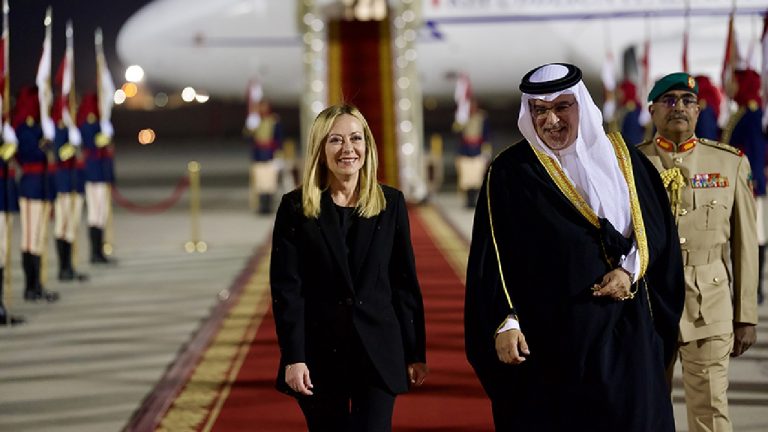
Italian Prime Minister Giorgia Meloni’s participation in the recent Gulf Cooperation Council summit signals Rome’s renewed emphasis on strengthening historical ties with the Arabian Peninsula. This diplomatic initiative proposes creating an ambitious Mediterranean-Gulf partnership framework that could reshape regional connectivity and economic integration between Europe, the Middle East, and Asia.
Historical Foundations for Modern Partnership
Meloni’s strategic vision draws explicitly on ancient Roman-Arabian commercial and cultural exchanges dating back millennia. The Limes Arabicus—the frontier between the Roman Empire and Arabia—functioned not as rigid barrier but as dynamic space facilitating transit, communication, and trade. Archaeological evidence from Southern Italy reveals Nabataean communities thriving there before the Common Era, while Roman garrisons protected Arabian Peninsula trade routes and Red Sea islands.
This historical continuity provides cultural foundation for contemporary strategic partnership. Italy’s geographic position—controlling access to the Mediterranean, which handles 20% of global maritime traffic despite comprising only 1% of world waters—makes it natural intermediary between European markets and Gulf economies.
The GCC-Med Partnership Framework
Meloni proposed establishing a “GCC-Med” forum bringing together Gulf and Mediterranean nations to create systematic cooperation architecture. This framework aims beyond bilateral Italy-GCC relations to encompass broader European, Middle Eastern, and North African engagement. Unlike competitive or adversarial arrangements, the proposed partnership emphasizes complementarities, synergies, and mutual strengths among participating states.
The partnership rests on seven strategic pillars currently under development through a joint four-year action plan:
Infrastructure Connectivity: The India-Middle East-Europe Economic Corridor, endorsed by G20 leaders in New Delhi during 2023, represents the partnership’s foundational infrastructure element. This initiative proposes enhanced maritime and rail connectivity linking three major economic regions. Meloni suggested Trieste—Italy’s historic northernmost Adriatic port—serve as European terminus. While the Gaza conflict has delayed implementation, multiple European states now compete to become the corridor’s western anchor point, reflecting the project’s strategic significance.
Digital Infrastructure: The Blue-Raman cable system exemplifies next-generation connectivity, creating undersea telecommunications backbone linking India and Europe through the Arabian Peninsula and Mediterranean. Submarine cable systems increasingly determine digital economic competitiveness, making this infrastructure crucial for regional integration.
Energy Transition Cooperation: Italy recently concluded energy agreements with Saudi Arabia and the UAE complementing broader investment frameworks with all GCC states. Meloni described the energy pillar as “more pragmatic and less ideological,” acknowledging that Gulf states consistently advocate energy policies respecting developing countries’ national priorities rather than imposing uniform transition timelines.
Trade and Investment Expansion: Current bilateral trade totals $35 billion annually—modest given the combined market exceeding $4.8 trillion. Italy offers partners financial instruments, industrial expertise, and advanced technological capabilities to accelerate economic integration. Investment flows remain limited but growing, particularly in energy sectors.
Gaza Reconstruction Engagement: Both Italy and GCC states support current stabilization frameworks, with Rome contributing through Palestinian security force training and reconstruction aid. Meloni’s close relationships with both American and Israeli leadership potentially position Italy as effective mediator for advancing stalled implementation phases. However, concrete progress requires deploying personnel for international stabilization forces and overcoming current diplomatic deadlocks.
Iran Diplomatic Channels: Italy and GCC countries favor diplomatic approaches to Iranian nuclear issues with full International Atomic Energy Agency involvement. Rome has hosted two negotiating rounds between Tehran and Washington, signaling willingness to facilitate continued dialogue despite regional tensions.
Interfaith and Cultural Dialogue: Meloni addressed tensions between European countries and Muslim minorities, discussing what she termed “Islamic separatism” that risks undermining social cohesion and fueling hostility toward Muslim communities. These comments, somewhat unusual at a summit with states that do not send significant immigrant populations to Europe and have extensively promoted interfaith initiatives, appeared directed toward domestic Italian constituencies rather than Gulf partners.
Strategic Context and Implementation Challenges
The partnership proposal emerges from Italy’s recognition that European Union membership need not preclude deeper Middle Eastern and North African engagement. Previous Italian governments expressed interest in strengthening Global South relations, including with Gulf states, but achieved limited concrete progress. The current administration seeks to translate historical connections into operational partnerships addressing contemporary challenges.
Several factors will determine implementation success. First, competing European interests regarding the India-Middle East-Europe Corridor’s western terminus may complicate unified Mediterranean strategy. Multiple states recognize the corridor’s potential for reshaping regional trade patterns and enhancing connectivity with Asian markets.
Second, Gulf states’ investment strategies increasingly emphasize technological innovation, renewable energy, and economic diversification beyond hydrocarbons. Italian capabilities in advanced manufacturing, design, and specialized industries align with these priorities, but actualizing this complementarity requires sustained institutional cooperation beyond summit declarations.
Third, energy transition cooperation must navigate divergent timelines and priorities. While Italy seeks secure transitional energy supplies alongside renewable development, Gulf states resist uniform decarbonization schedules that ignore their developmental needs and economic structures. Finding frameworks respecting these differences while advancing climate objectives represents ongoing challenge.
Broader Regional Implications
The GCC-Med initiative reflects wider trends toward multipolar regional architectures that transcend traditional Western-centric frameworks. As Gulf states diversify partnerships beyond historical reliance on Anglo-American relationships, European countries compete for enhanced access to Gulf capital, energy resources, and strategic positioning.
Italy’s Mediterranean location and extensive North African relationships potentially position it as unique bridge connecting three regions. The Mediterranean encloses four critical maritime chokepoints: the Strait of Hormuz, Bab al-Mandab Strait, Suez Canal, and Strait of Gibraltar—all vital for international commerce and energy security. Italian strategic influence over these passages could enhance Rome’s value to both European and Gulf partners.
However, realizing this potential requires transcending rhetorical commitments. The proposed four-year action plan must translate principles into specific projects with defined timelines, funding mechanisms, and accountability structures. Previous Mediterranean partnership initiatives have often foundered on implementation gaps between ambitious declarations and operational realities.
The Path Forward
The GCC-Italy partnership represents significant diplomatic initiative that could reshape Mediterranean-Gulf relations. Success depends on several factors: maintaining political continuity despite potential government changes, securing adequate financing for major infrastructure projects, navigating competing European interests in corridor development, and building institutional capacity for sustained cooperation beyond bilateral summits.
The partnership’s emphasis on complementarity rather than competition offers promising foundation. Gulf states possess capital and energy resources; Italy brings technological expertise and industrial capabilities. Mediterranean and Gulf regions collectively control critical maritime passages and serve as nexus between European, African, and Asian markets.
Yet historical precedents counsel caution. The Mediterranean has witnessed numerous partnership initiatives that achieved limited results despite initial enthusiasm. Converting summit declarations into operational frameworks requires sustained diplomatic energy, institutional development, and willingness to address difficult issues including security concerns, migration pressures, and energy transition disagreements.
The seven-pillar framework provides comprehensive blueprint. Infrastructure, digital connectivity, energy cooperation, trade expansion, conflict resolution engagement, diplomatic facilitation, and cultural dialogue collectively address key dimensions of contemporary regional relationships. Whether this blueprint generates substantive transformation or becomes another aspirational document depends on implementation commitment from all parties during coming years.
Italy’s proposal to host GCC-Med summits could institutionalize cooperation mechanisms that outlast individual governments and create momentum for sustained engagement. The partnership’s success will ultimately be measured not by diplomatic pronouncements but by concrete projects that enhance connectivity, increase trade flows, advance energy transition, and improve understanding between Mediterranean and Gulf peoples.
Original analysis inspired by Abdel Aziz Aluwaisheg from Arab News. Additional research and verification conducted through multiple sources.