European efforts establishing strategic relationships with developing nations confront fundamental skepticism as flagship initiatives fail delivering promised transformations. The €300 billion Global Gateway program—marketed as values-based alternative to China’s Belt and Road Initiative—draws sustained criticism from Global South partners questioning whether Brussels repackages existing commitments rather than mobilizing genuine new resources for infrastructure and development.
Global Gateway Implementation Reveals Structural Limitations
Launched December 2021, Global Gateway aims mobilizing €300 billion in global investments through 2027, with €150 billion allocated toward Africa. Yet critics describe it as mere rebranding strategy repackaging existing instruments without adding new financial flows, slow to spur collective action and deliver tangible ground-level results.
The initiative offers €53 billion in guarantees functioning as insurance for multilateral development banks and member states if projects fail, alongside only €18 billion in grants supporting rollout—figures paling against $1.17 trillion China already invested in BRI. European Court of Auditors questioned whether EU can mobilize claimed sums, suggesting Europe claims supporting development without committing meaningful new financial resources.
Civil society organizations highlight weak transparency and accountability, with governance structures leaning heavily toward private sector and development finance institutions while marginalizing civil society. Analysis shows flagship projects lack clear development additionality, focusing instead on financial returns for investors—suggesting European corporate interests rather than recipient country priorities drive selection.
Carnegie Endowment analysts note Global Gateway’s limited early-stage impact revealed it took on too much, simultaneously remaining active in development, sustainability agenda, digital innovation and trade route safeguarding. This overextension left initiative without clear focus or message in competing connectivity strategies era, making use and impact elusive within Europe and abroad.
Colonial Legacy Patterns Persist Despite Partnership Rhetoric
Europe’s engagement with Global South remains more transactional than transformational due to colonialism legacy. Despite EU being among largest development aid providers, Europe inadequately addresses Global South concerns while complacently enjoying economic and political clout comfort zone. Recent geopolitical awakening instead revealed economic fragmentation, weak political leadership, lacking integration, policy incoherence and parochial interest dominance.
Critics repeatedly highlight how Eurocentrism undermines partnerships by marginalizing developing countries, relegating them to mere markets for investments and raw materials rather than equal-footing partners. As normative actor, Europe touts multilateralism values, rule of law and democracy, yet mismatch persists between stated policies and implementation abroad.
Global Gateway projects operate in 29 of 37 heavily indebted poor countries, risking partner country capacity to satisfy citizens’ basic needs and rights. Analysis shows initiative enables investments by private companies from EU’s largest economies in countries with historical colonial links, raising neocolonial approach concerns—siphoning Global South resources rather than addressing local development priorities.
Most Global Gateway companies are French, German (both 13.6%), Spanish (10.2%), Belgian and Italian, with Global North company associations representing largest Business Advisory Group share (22%). Only one association appears representing Global South companies, reflecting European corporate interests’ key role in governance structure.
India-UK Agreement Highlights Alternative Partnership Models
While Brussels pursues Global Gateway with limited progress, other nations demonstrate viable alternative approaches. India and UK signed Comprehensive Economic and Trade Agreement in July 2025 following May 6th conclusion announcement, representing UK’s most significant post-Brexit FTA and India’s deeper global supply chain integration.
The agreement provides unprecedented duty-free access to 99% of India’s UK exports covering nearly 100% trade value, including labor-intensive sectors like textiles, leather, marine products, gems, jewelry and high-growth sectors like engineering goods and chemicals. UK opened 89.5% tariff lines covering 91% of UK’s exports, with services provisions covering 137 sub-sectors representing over 99% of India’s export interests.
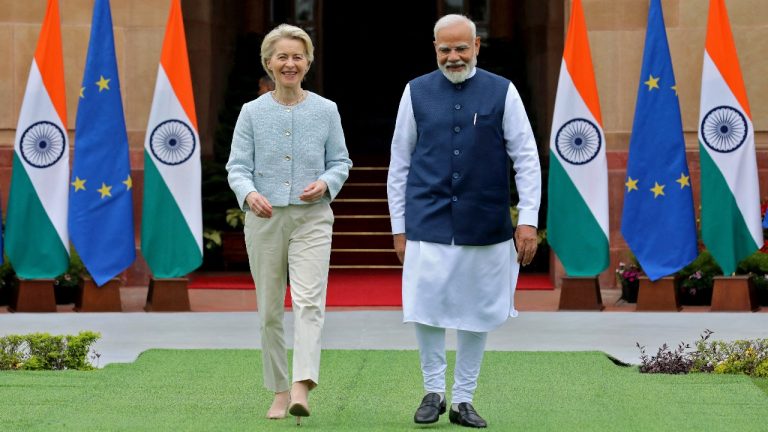
This demonstrates what substantive partnership produces: bilateral trade already reached $56 billion with target doubling to $100 billion by 2030, alongside $1.3 billion in new Indian investments creating approximately 6,900 UK jobs. Meanwhile, EU-India FTA negotiations remain stalled despite years of discussions—Brussels should take serious note of lacklustre progress and push for mutually beneficial conclusion.
China Competition Drives Europe But Fails Differentiation
Global Gateway explicitly positions as alternative or rival to Chinese Belt and Road Initiative. Yet Carnegie analysts note EU faces structural disadvantage as Beijing’s policy feedback loop proves much faster. More critically, China already moved beyond large infrastructure investments toward high-tech investments in digital and green sectors—rendering European criticisms of BRI model outdated.
CEPS analysts emphasize Global South countries simply don’t want choosing sides in looming US-China economic conflict—and no longer need to given multitude of initiatives courting them for raw materials, industries and consumer markets. Beyond China and Europe, African countries recognize many influential continental actors including Turkey, Gulf countries, Russia and India.
Europe typically distinguishes itself through commitment to European values, yet this becomes less clearcut as China now has own value-laden initiatives like Global Development Initiative. Both Global Gateway and BRI draw criticism from partner countries for mainly working with central governments at local authorities, civil society and community expense.
Trust Deficit Requires Fundamental Approach Shifts
Europe needs Global South’s agency in multilateral decision-making to bring long-lasting sustainable multilateralism. Global South needs Europe lending credence to concerns about rising geoeconomic/geopolitical uncertainties, external imposition of universal standards, sustainability regulations for core sectors, and economic diplomacy’s gradual establishment as global development strategy lynchpin.
Moving forward requires establishing proactive, robust, enduring and truly multi-centric partnerships grounded in mutual respect and shared ambition. Europe must overcome protectionist regulatory mechanisms and accelerate economic engagement with wide variety of Global South actors, increasing outbound investments in digital technologies, human capital, energy transition and capital market development.
Trade agreements remain key means opening cooperation avenues and promoting economic growth and resilience. Yet substantive progress demands Europe address issues of debt burdens and unsustainable partnership models systematically rather than rhetorically. Supply chain diversification identified as key European interest should drive search for alternative partnership models making trust building, supply chain management and economic diversification critical priorities.
Conclusion: Rhetoric Without Resources Undermines Credibility
Europe confronts uncomfortable reality: stated commitment to values-based multilateral partnerships means little without genuine resource mobilization and structural governance reforms centering Global South voices. Global Gateway’s evolution toward development through infrastructure model moves correct direction, yet progress remains insufficient catching up with China’s BRI.
The fundamental question persists: does Global Gateway primarily help “create market opportunities” for European businesses as critics charge, or genuinely advance partner country development priorities? Current implementation trajectory suggests former—contradicting stated values-based approach while perpetuating precisely the neocolonial dynamics Brussels claims transcending.
Without transparency around funding flows, project pipelines and monitoring alongside governance structures genuinely including civil society and local communities, Europe risks reinforcing rather than reforming extractive partnership models that colonialism legacy established. Whether Brussels possesses political will for fundamental restructuring remains doubtful—yet without it, credibility gap between European rhetoric and Global South reality will continue widening.
Original analysis inspired by Harsh V. Pant and Swati Prabhu from Observer Research Foundation. Additional research and verification conducted through multiple sources.